Kazakh artist Gulnur Mukazhanova brings her nomadic heritage to Frieze London 2026
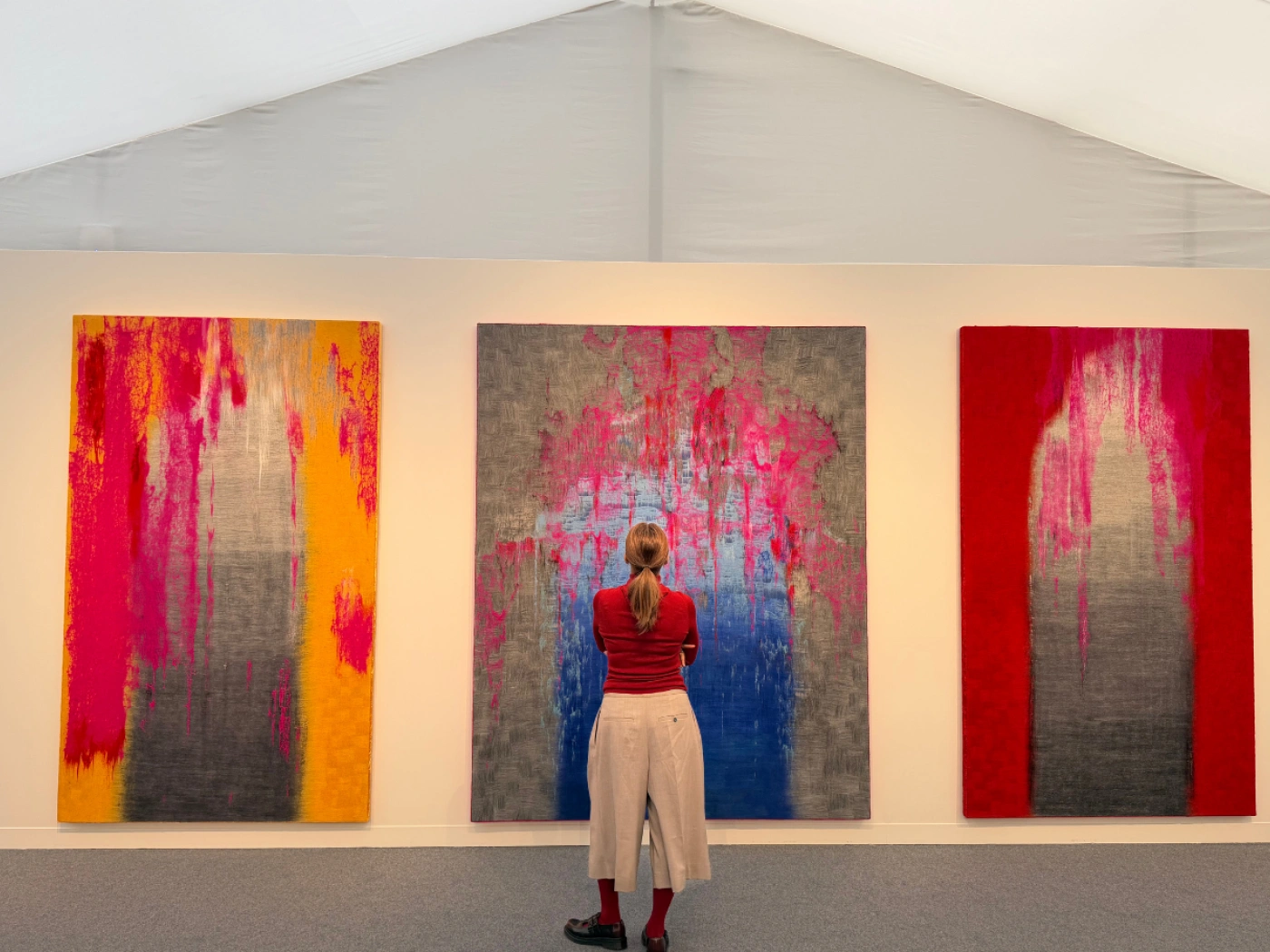
Kazakh-born artist Gulnur Mukazhanova was among the artists shown at this year’s Frieze London, held in The Regent’s Park from 14 to 18 October 2026. Her project, Bosağa: Journeys Across Cultures and Time, was presented in collaboration with Turkish Airlines
The work
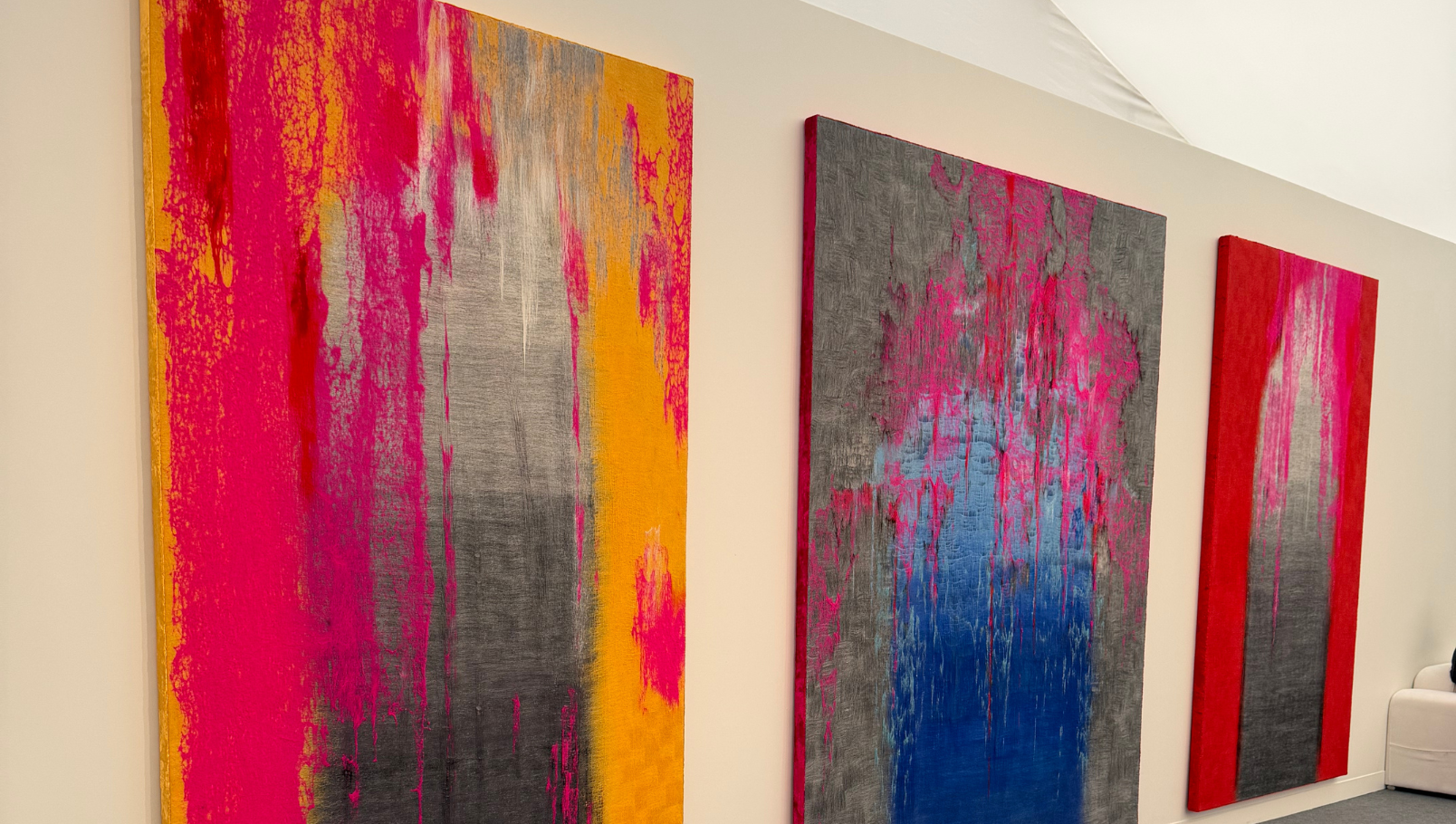
At its core is a triptych from Bosağa, a series Mukazhanova has been developing since 2021. “Bosağa” means “threshold” in Kazakh and other Turkic languages. It stands for a crossing point between places, cultures or even states of being.
The works are made of felt, a staple of nomadic life in Central Asia that was traditionally used to build yurts. Mukazhanova pairs handmade felt with scraps of bright textile gathered on her travels through Asia. Nothing is stitched or glued. The pieces are pinned, which keeps the surfaces delicate and makes the point that things don’t have to last forever.
Euronews points to two sources of inspiration. One is the tuskiiz, a Kazakh embroidered wall hanging that carries protective symbolism. The other is Italian art of the 14th century, where she studied the ornate carpets that travelled from Asia to Europe along the Silk Road.
About the artist
Mukazhanova was born in 1984 in Semey, Kazakhstan, and lives and works in Berlin, according to Aspan Gallery. She holds an MA in textile and surface design from the Weissensee School of Art and Design Berlin (2013). Her recent solo shows include Bosağa – Transition. The Weave of Ancestral Memory at the Tselinny Center of Contemporary Culture in Almaty (2025) and Öliara: The Dark Moon at Mimosa House in London (2022). CHAT in Hong Kong also notes her participation in the Bukhara Biennial and, with the DAVRA collective, in the opening performance of Documenta 15.
Her next big project is in the UK. From 20 November 2026 to 2 May 2027, Manchester’s Whitworth will show The Manifold of Memory: Detail Within Detail, its first Bagri Commission and Mukazhanova’s first UK museum exhibition. The immersive installation starts from a single textile fragment in the museum’s collection and scales it up into a large felt environment drawing on the nomadic cultures of the steppe.
The fair
Frieze London runs alongside its sister fair, Frieze Masters, and in 2026 the two brought together almost 300 galleries from 48 countries and regions. Frieze London, which is devoted to contemporary art, had 172 galleries from 42 countries and regions. Frieze Masters, which covers everything from antiquity to the 20th century, had nearly 140 from 30.
Frieze London was founded in 2003 and is directed by Eva Langret. It has five sections:
- Galleries: the main section for commercial galleries of any age.
- Focus: the long-running section for young galleries.
- Artist-to-Artist: seven solo presentations by emerging artists, each picked by an established name such as Yinka Shonibare, Otobong Nkanga or Jeffrey Gibson.
- Editions: limited-edition works at more affordable prices.
- The Code Universe: a new invitational section curated by Carol Yinghua Lu, director of Beijing’s Inside-Out Art Museum, on the forces that shape popular culture.
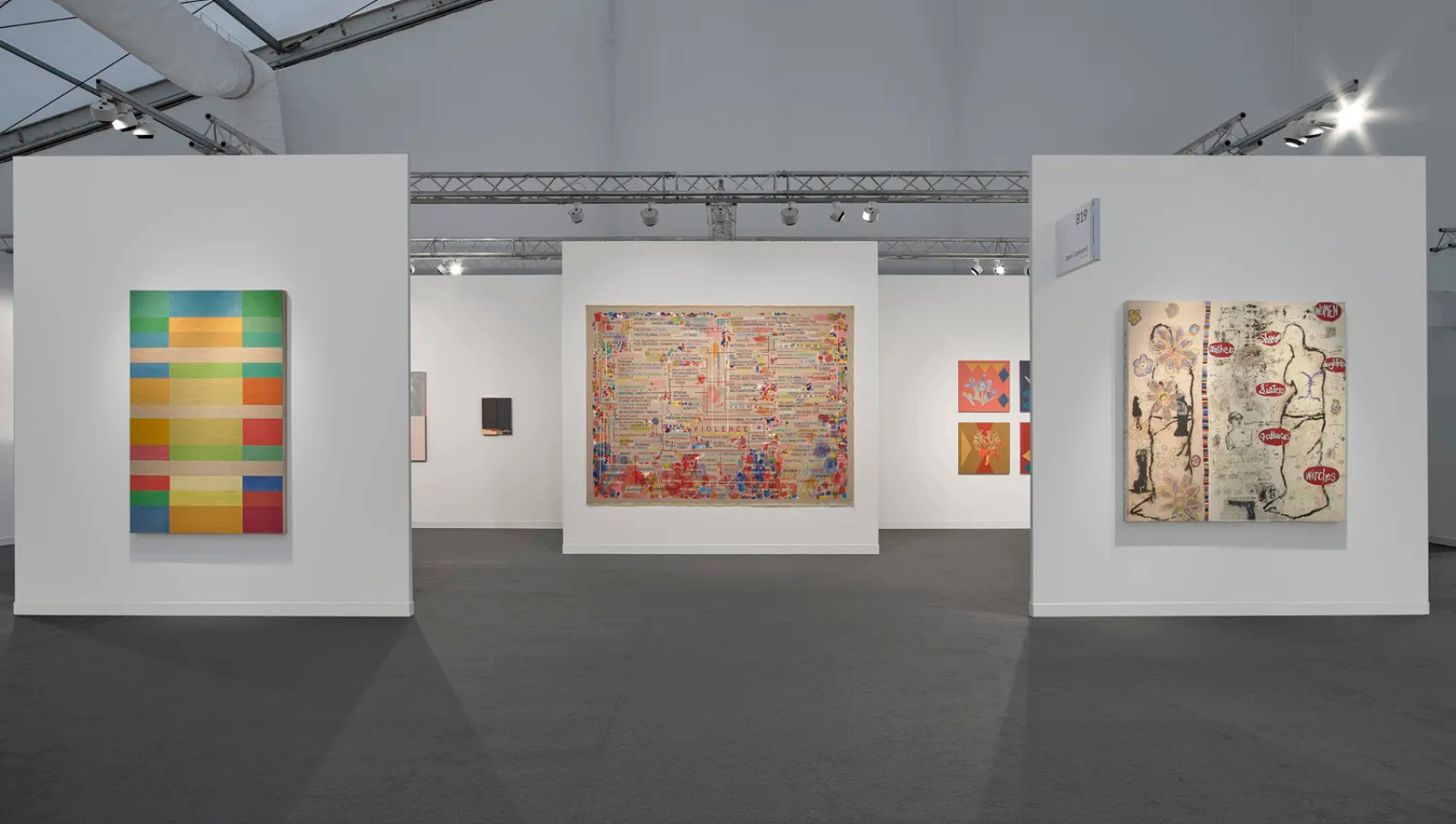
Blue-chip names such as Gagosian, Hauser & Wirth, David Zwirner, White Cube and Pace shared the aisles with London’s own gallery scene and with newcomers from further afield. At Frieze Masters, a new thread called Queering Modernism looked at queer experience in 20th-century art.
Beyond the fair itself, the free Frieze Sculpture show ran in The Regent’s Park from 16 September to 1 November. It featured 11 international artists, including Angel Otero, Conrad Shawcross, Tarini Sethi and Ivana Bašić, as listed by ArtRabbit, and was directed by curator Fatoş Üstek. Frieze Week, the city-wide programme around the fairs, put major exhibitions on at the Tate, the British Museum, the Hayward Gallery and other institutions.
Results
Frieze’s own wrap-up puts attendance at 95,000 visitors from 108 countries and regions, including delegates from 426 institutions. Visits from India and China more than doubled compared with 2025.
Dealers reported brisk business across price levels, and some Focus booths sold out within the first hours of opening day. At the top end, Hauser & Wirth sold a painting by Avery Singer for $800,000, and David Zwirner placed new works by Michaël Borremans for $1.5 million. At Frieze Masters, Hauser & Wirth sold a still life by Jan Brueghel the Elder for around £5 million.
Textile art found buyers too. In Focus, first-time exhibitor Chemould CoLab sold three large textile works by Jayeeta Chatterjee, priced at $13,000 to $26,000. The largest went to an Indian institution.
Prizes and acquisition funds for public collections were also part of the week, including the Frieze Tate Fund, the Arts Council Collection Fund and the Nicoletta Fiorucci Foundation Prize, which went to Unathi Mkonto of Goodman Gallery. The full list is on Frieze’s Who Won What page.